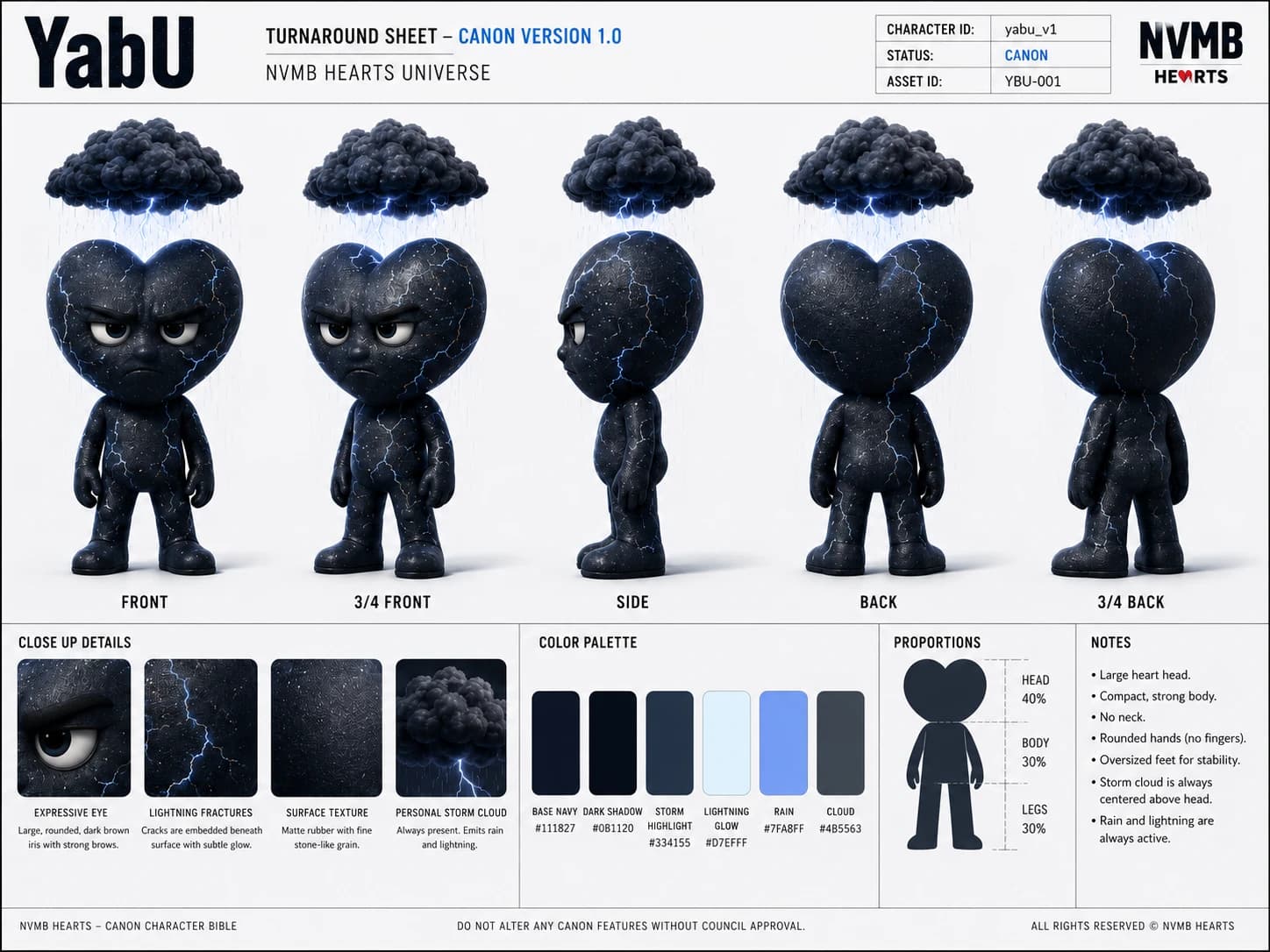
MAIN REFERENCE
Example project
The first creative world being built through NVMB. This case study is proof of the system in use—not a boundary around the kinds of worlds the product can support.
Establish the character
The primary reference establishes Yabu’s silhouette, proportions, facial construction, stone-like material, storm-cloud relationship, and other canonical traits.
Structure the assets
Each visual record has a role, a status, and a relationship to the character rather than living as an unlabelled file.
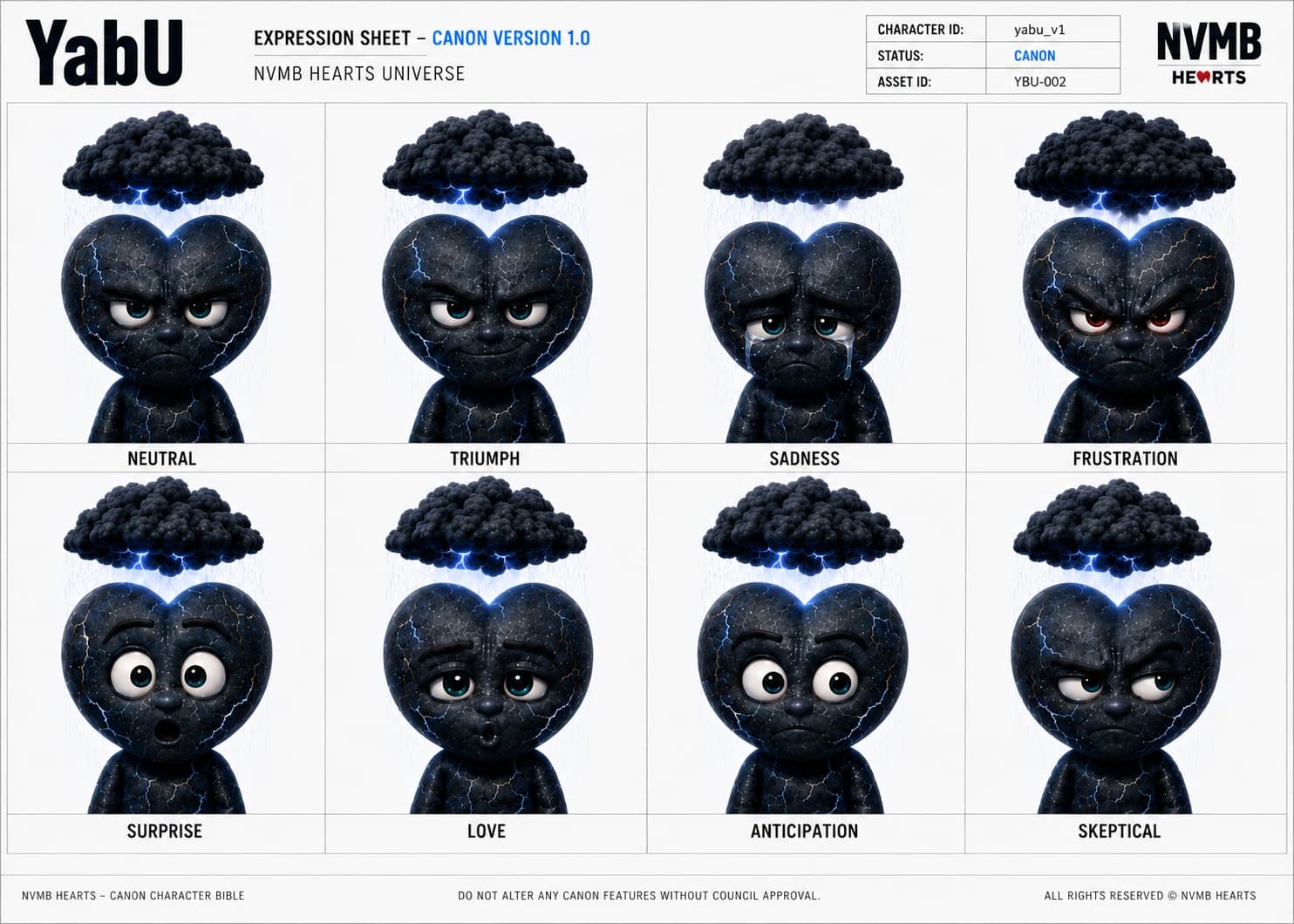
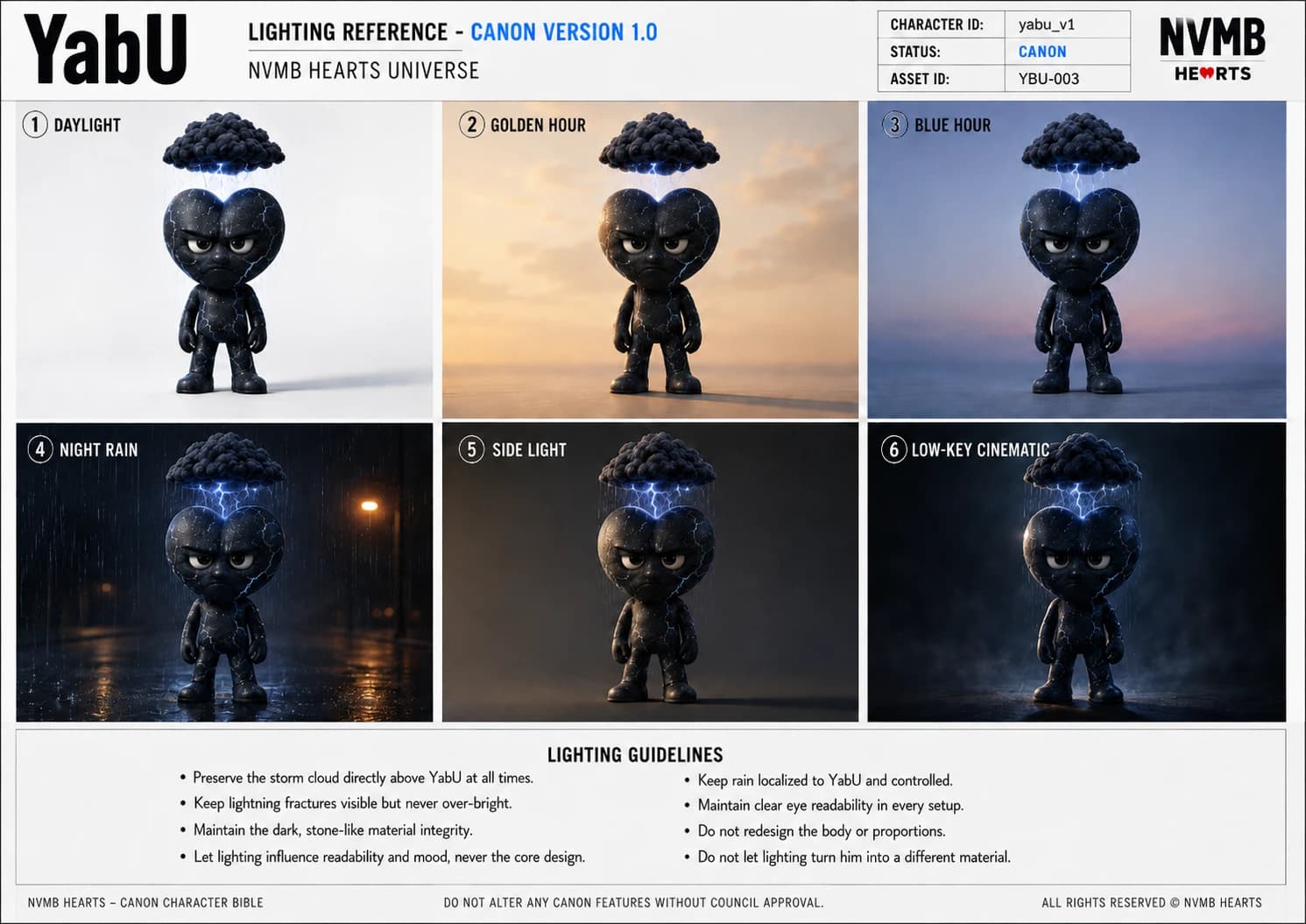
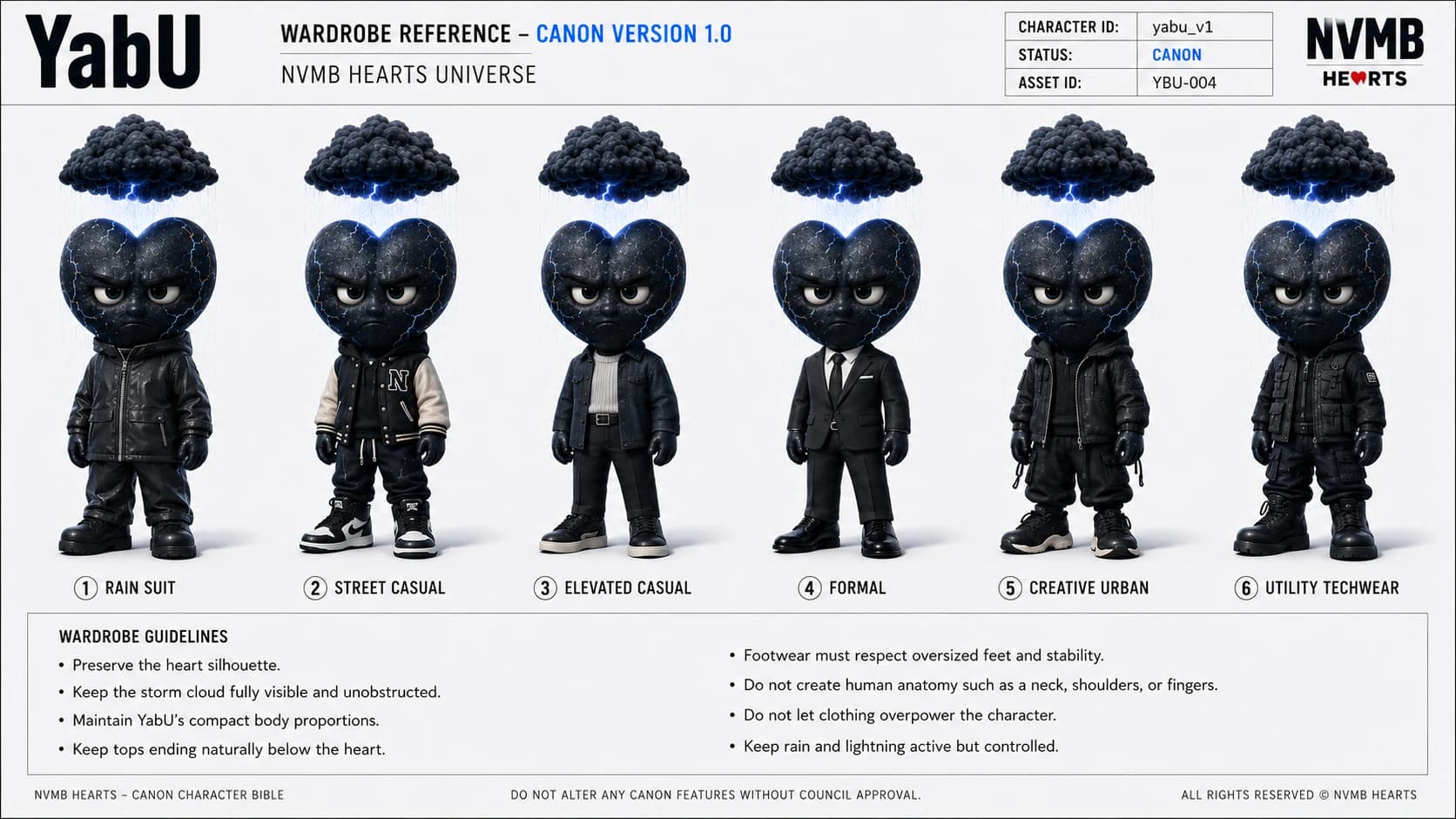
Create in new contexts
New story imagery tests whether a persistent identity remains recognizable across environments, lighting, scale, and narrative pressure.
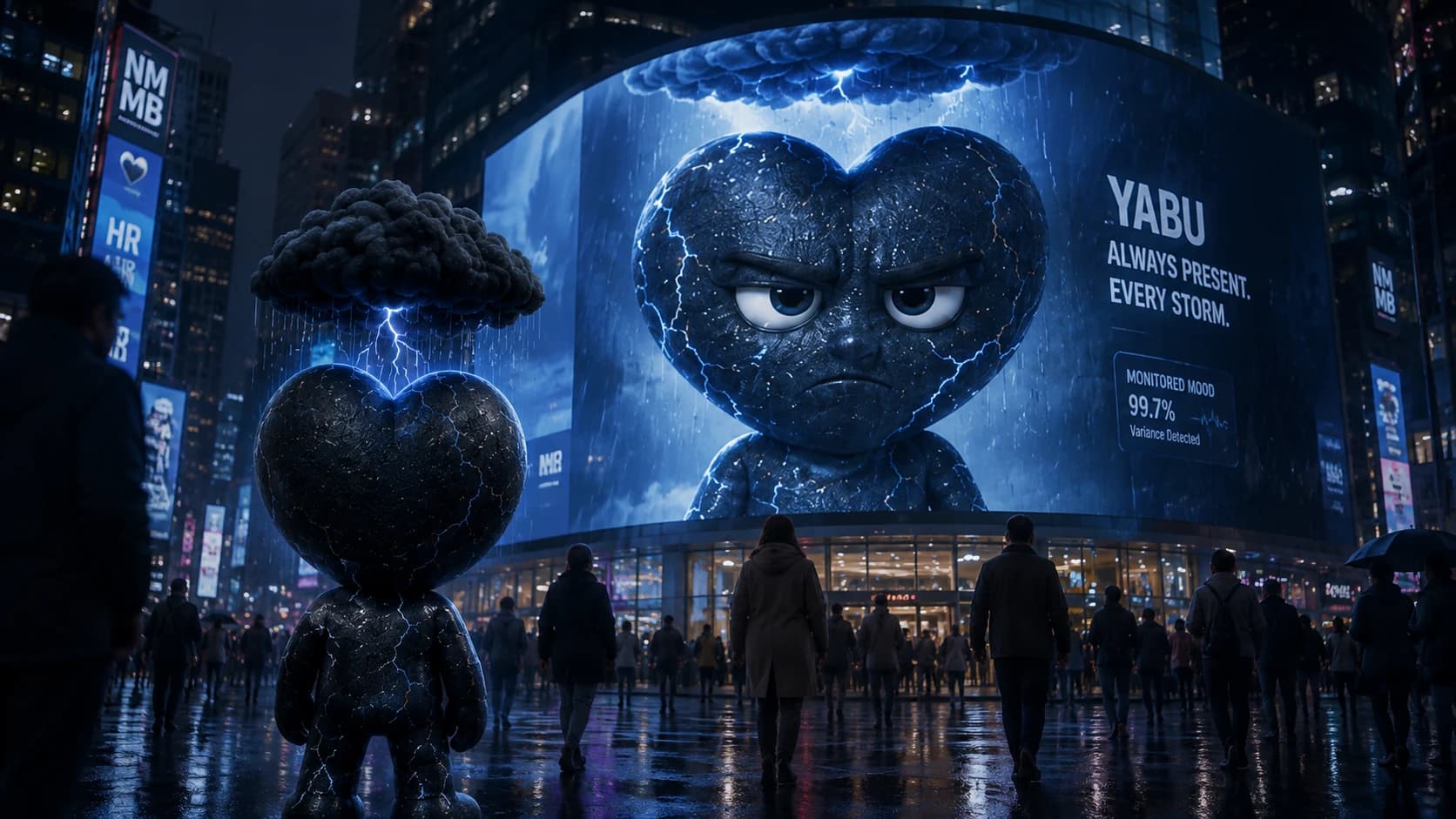

Review new material
A new depiction can be evaluated against Yabu’s defining signals before it is treated as part of the maintained world.
Expand the world
Additional characters, locations, artifacts, stories, production notes, and creative references can enter the same world without being flattened into one folder.